A sofa or accent chair takes on more than most homeowners realize — skin oils, everyday dust, pet dander, the occasional spill, and months of sunlight all settle into the fabric over time. Vacuuming lifts what's sitting on the surface, but it can't reach what's actually worked its way down into the weave. That's the gap professional upholstery cleaning is built to close, and it's a genuinely different process than most people picture.
It starts with the fabric, not the stain
Before any cleaning happens, the first real step is figuring out what the piece is actually made of. Upholstery fabrics vary enormously — cotton and linen blends, synthetic microfiber, delicate silks and chenilles, leather — and each one tolerates moisture, agitation, and cleaning solutions differently. A method that's perfectly safe on a synthetic sectional can leave water rings or shrinkage on a natural-fiber antique. So a quick inspection and a small test spot in an inconspicuous area always come first, before a single pass with any tool.
From there, dry soil gets removed with vacuuming and gentle agitation — this alone often pulls out a surprising amount of debris that's been sitting deep in the fibers. Visible spots and heavier soiling get a targeted pre-treatment next, giving it time to actually break down before the deeper clean begins.
The wand does the real work
The photo below is from a recent job on a vintage chenille sofa — you can see the low-moisture extraction wand actively treating the seat cushions, section by section. This is the core of the process: warm water and cleaning solution are applied under light pressure, immediately followed by extraction back out through the same tool, so the fabric is treated and rinsed in nearly the same motion rather than left to sit wet.
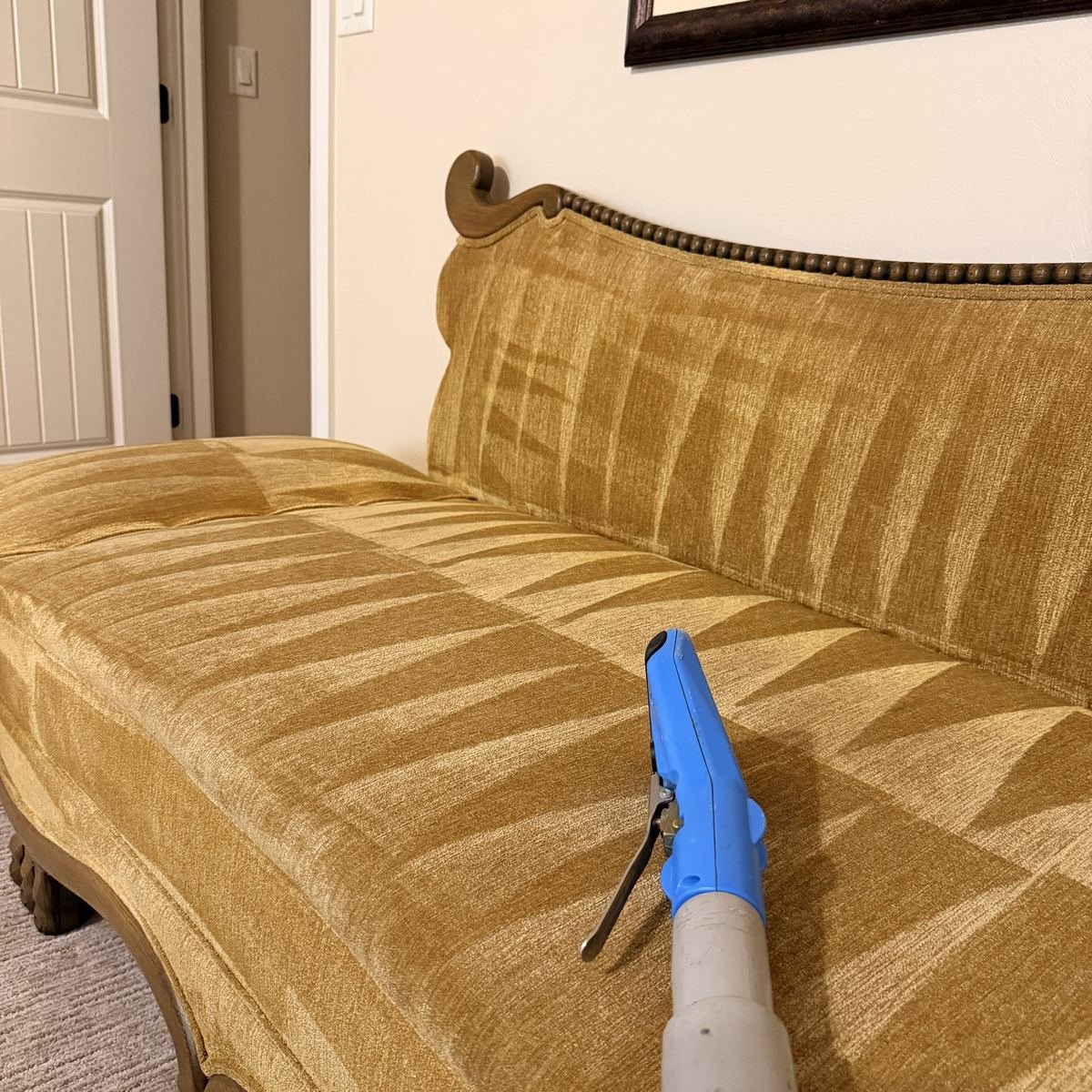
Low-moisture extraction in progress on a real Revive Cleaning job — the same gentle process we use on everyday furniture and older, more delicate pieces alike.
Keeping the process low-moisture rather than saturating the fabric is deliberate, not just a matter of speed. Upholstery sits on cushioning and a wood frame underneath — over-wetting it can lead to slow drying, a musty smell, or in worse cases mildew inside the cushion itself. It can also cause natural fibers to shrink slightly or develop a faint ring where the wet area meets the dry, which is the opposite of what a cleaning should leave behind. A controlled, low-moisture pass gets the fabric genuinely clean while drying in a matter of hours rather than days.
How often it's actually worth doing
As a general guideline, most upholstery holds up well on a professional deep clean every 12 to 24 months for an average household. A few things reliably shorten that window:
Pets. Dander, hair, and the oils on a dog or cat's coat work into upholstery fabric faster than plain foot traffic ever does. If pets are regularly on the furniture, an annual cleaning is a reasonable default.
Kids and daily use. A sofa that sees daily sitting, snacking, and general household life picks up soil far faster than a formal living room piece that's mostly for company.
Sun exposure. A piece that sits near a bright window — common in a lot of St. George homes given how much natural light comes through — can show fading and fiber wear faster, and regular cleaning helps keep the fabric in better condition overall, not just cleaner-looking.
Signs it's time, regardless of the calendar
The clearest signs are usually visible before they're due by the calendar: a noticeably flatter, duller look to the fabric compared to when it was new, a faint odor that lingers even after airing the room out, visible darkening on arms and headrests where skin contact is highest, or a spill or stain that didn't fully lift with at-home spot cleaning. Any of those is a reasonable trigger on its own, even ahead of schedule.
If it's been a while since your upholstery had a real deep clean — or you're just curious what a piece like yours would need — we're happy to take a look and give you an honest read, no obligation.
Ready to book?
Get a free, no-obligation quote in minutes.
How Often Should You Deep Clean Your Carpets?
Vacuuming keeps carpet looking fine on the surface, but it doesn't reach what's actually living in the fibers. Here's a realistic timeline for professional deep cleaning.
Desert Living: A Seasonal Home Cleaning Checklist for St. George
St. George's climate is beautiful, but it's genuinely different from most places when it comes to keeping a home clean. Here's what to prioritize through the year.